
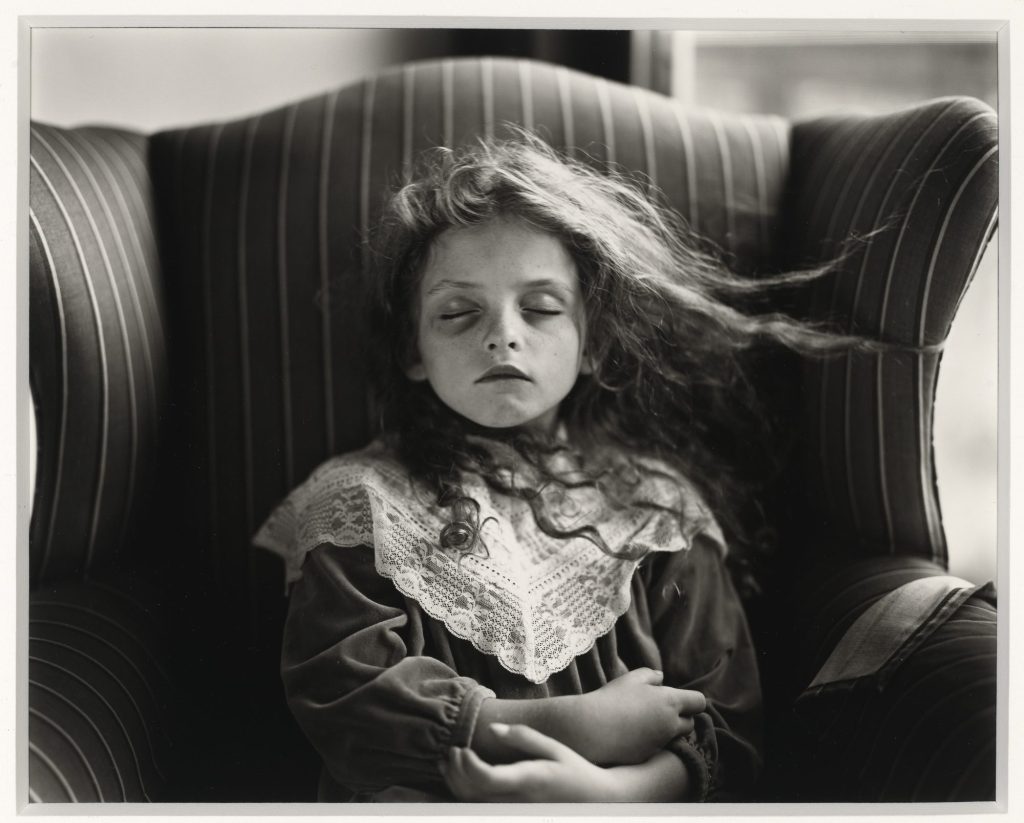
On Trespassing
TW: Small death stuff, suicide-y stuff, ends happy though.
In the weeks leading up to my father’s death, I kept on reciting the Our Father in my head, to block out the possibility, to let the words obfuscate the image.
I am not religious nor was my father, but we remained curious, between our shared eye rolls. I loved the opening of Nick Cave’s, ‘Into Your Arms,’–I don’t believe in an interventionist God / But I know, darling, that you do. And we both enjoyed a killer line from Julian Barnes’ book about mortality, Nothing to Be Frightened Of, in which he is asked Do you believe in God? The answer: No, But I miss him. I had a devilish uncle in North London who left Ireland for work aged 15, who used to say, It’s terrible that I don’t believe any more. Will you pray for me? That seemed to sum it up nicely. My whole family was in a long-distance relationship with doubt.
If I was going to recite any prayer, it would have been the Hail Mary, but there was something comforting about saying the word father over and over again, as if it would cast a magic spell. It also allowed me to say one of my favourite words, one that is repeated, that we just don’t say in real life:
Forgive us our trespasses as we forgive those who trespass against us.
For some reason the word always made me giggle. It seemed archaic, and I also associated it with the trespassing of property; to enter where you do not belong. I was a trespass hobbyist as a child, adolescent and adult. Keep Out read as Come In to my eyes, and I used to break into abandoned buildings as a teenager.
Being from a clot of housing estates in what evolved into a suburb, I never understood the intricacies of land ownership. I didn’t understand what it meant to own a field, that I couldn’t simply go see a cow, or peer over a cliff edge (who the fuck owns a cliff?) or just park my bum in the middle of a patch of grass and read my book. The word comes, as it sounds, from French, trespasser, to go across, transgress or sin.
I was passing through Paris last week, and picked up Sally Mann’s excellent latest book on creativity, Art Work. Mann was raised and has remained around Lexington, Virginia, where the relationship with God is almost certainly not long-distance, rather closed circuit. In the chapter, “Luck”, she writes:
Early in my career I took to heart an observation from E. L. Doctorow that suggests that transgression is the life and soul of art-making and to be creative you must be in touch with the forbidden…Trespass is an undeniable necessity in almost all art forms, and especially the two I have chosen to dabble in–as Czeslaw Miłosz once remarked, when a writer is born into a family, that family is finished.
Something significant happens to the imagination when you are raised in a faith—even if the faith is ambient at home, as it was for me. Where it wasn’t the least bit ambient was at my Catholic girls’ school. I developed late childhood mental health issues, which I explore in my new novel, triggered by aggressive long-term bullying, but also a generous dollop of genetics.
I was one of the most taboo subjects, transgressive if you will–a child who wanted to take their own life before even reaching puberty, and had absolutely no way to express that in language. I just fell silent, and not long after I was medicated, regulated and returned to school. My writing mentor recently asked me why I didn’t go through with it, and I said instinctively, because I thought that God would be mad with me. Not so much because it was a sin in the faith my locale was embedded in, but I had this idea that this man, God, would be very cross with me, even when I was dead. So trespass, I did not.
My writing mentor also recently told me that some of my writing was boring and I, he emphasised, was not. I believed him. The body grows, the birthdays arrive, but if you stop developing as a writer internally, as I did for over fifteen years between ages 17 and 33, the writer you were stays the same. And who was I at 17? Terrified. Although I did many brave external things like work with serial killers, volunteer with a death penalty project, run three marathons, inside, my creative self had the resilience of a premature chihuahua.
Showing, right now, is terrifying in the process of completing my novel. It’s not that I’m afraid of getting caught out. I’m afraid of getting caught. But after years of therapy, happy pills, self-development, journalling, so-called growing, who exactly is going to catch me? God? Bullies who have long since become other people, in other lives, and barely remember mine?
I think you and I both owe it to ourselves to be ourselves on the page as much as we try to off it. How it’s received is obviously out of our control, but it always has been. We have to cross over into the place in our work that’s forbidden us. And catch, it turns out, is what happens when we finally do. Catch’s other meaning: to break someone’s fall, to receive something, and to hold it, carefully, tenderly, intentionally—until letting go.
*Join me for The Southern Gothic if you want to wrestle with DEATH, GOD, OH MY GOD etc. in your work. We’ll have fun, trespass a little, and I promise you’ll leave with better work.*
Photo: ‘Black Eye’ (1992) by Sally Mann
 sarahbyrnewrite.com
Leave a comment