
Going on Hiatus…
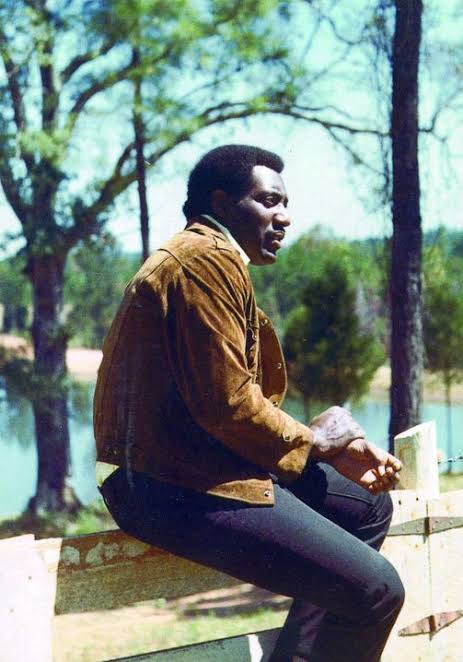
Just over a week ago, I looked for a T-shirt for my father in Atlanta airport. I was careful about the size. I had been getting his chest wrong since he got renal cancer in 2022, when he lost so much weight that he needed a new T-shirt wardrobe. After he started immunotherapy, and was able to have a kidney removed, the weight gradually returned, never fully. He returned to some of his early-life favourites: Café Noir biscuits and stewed rhubarb.
In Atlanta, while waiting for my connecting flight home, I saw a framed poster of Otis Redding, one of my father’s favourite singers. Redding was from Macon, Georgia, born in 1941, the same year as Emmett Till. My father first played an Otis record for me when I was a toddler. This was before I knew anything about the history of the American South. All I heard was Redding’s voice, incredulous that the sound was made by an actual human being. At some stage, I tried to put Otis on myself, breaking the stylus of my father’s record player many times.
My father was the first person who told me about American racial inequality, beginning with music like Redding, Holiday and, later, Sam Cooke. He explained that ‘A Change Is Gonna Come’ was not just music, but a song that had emerged out of a particular history, in which it was difficult and dangerous to be Black in America. When I was working on a death penalty trial in Shreveport, my father was excited, not because of the complexities of American justice, but because Shreveport was where Sam Cooke had written the song in response to being turned away from a hotel for being black. I can’t believe you’re there. Where that song grew from.
He liked to remind me that the men singing these songs were dead, not to upset me, but to instil gratitude, I think. Otis gone at 26, Sam at 33. It was a miracle, he would say, that we had these voices at all. And despite my father’s life-long obsession with human rights, when it came down to it, he loved Otis Redding because of how he sounded. Pain or no pain. History or no history. The voice was the voice.
I had to come home unexpectedly from New Orleans. The cancer had suddenly and rapidly metastasised to my father’s heart. He was in the cardiac unit, while doctors and nurses investigated whether there was anything they could do about the tumour growing in one of the ventricles. Blockages. My father had removed every splinter from my skin, unblocked every toilet I had clogged with too much tissue. He carried longitudinal and international grudges against my ex-boyfriends, incredulous that anyone would upset his daughter.
I looked, as I always did at airports, for a T-shirt and something sweet to munch on for him. When I showed him the T-shirt in his hospital ward, his face initially prepared itself for disappointment. Then he looked at it again, and smiled. I think it will fit, but please take it home. It is too good for here.
I insisted, not knowing why. I had become, without noticing, a child again. If I could get my father’s T-shirt size right, maybe everything else was going to be okay.
Please take it home. It doesn’t belong here.
Nothing could be done about the tumour growing in my father’s heart. He died on a Wednesday—the middle of the week—in the middle of the day, in August, the least middling man I knew.
Note: As I have now returned from Louisiana, I will pause Acoustic Weather until 2027, when I hope to return to the Deep South to continue my disaster justice work and writing. Thank you for reading so far, and for your continued support of my work.


Leave a Reply