
A Literary Diary Series
Still South
In the nineteenth and twentieth centuries, to go south meant to disappear—to head towards Texas or Mexico and evade your creditors. For some Native American tribes, it was a synonym for dying. During the Wall Street Crash, financial markets were described as having gone south.
South points down, and down is back if your society feeds on forward.
In Ireland, where I was born, south carries enormous geographical, political and cultural resonances. In France, where I live, however illusory, the south suggests lemons, lavender and a languid life by the sea. South is not a constant; it shifts depending on where your feet are.
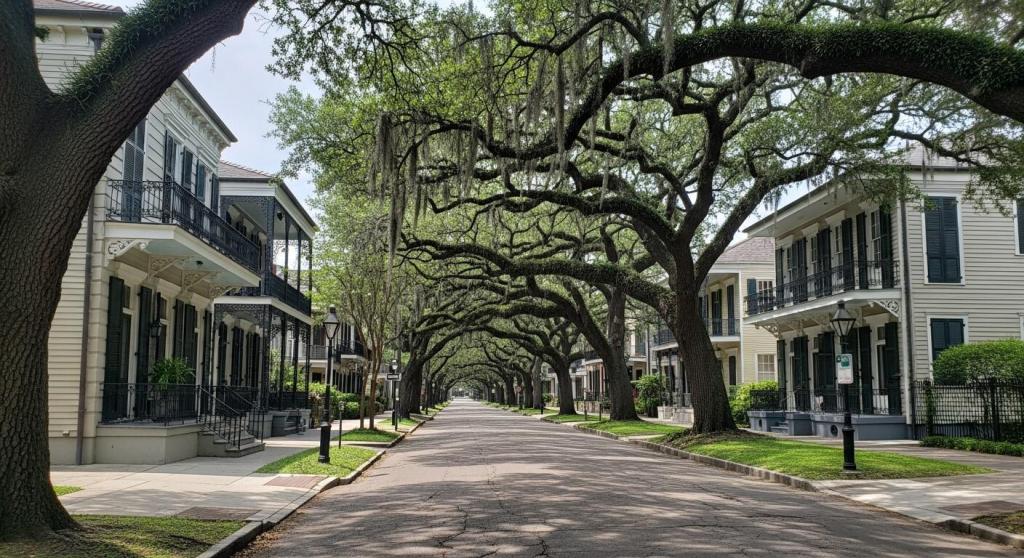
Yesterday, on one of my many failed attempts at walking in New Orleans, I saw a red squirrel, then another, then another, loitering at the bole of a myrtle tree. It was 2pm. At first I was delighted. Then I realised: squirrels don’t gather in the middle of a residential street in the neon daylight of New Orleans.
There were still ice cubes in my coffee, so I approached the animals and tipped the ice onto the grass. One squirrel vibrated where he stood when he met my gaze. I gathered, much slower than I should have, that all was not well. Squirrels go south of a tree when all other routes have been exhausted. The grass drank the ice, the squirrel gone.
I have met, as you might anywhere, two types of people here: stayers and leavers. I’m neither, so I just shut up and listen. An Uber driver from Baltimore, a city often considered one of the most dangerous in the States, tells me that New Orleans is a third-world country, where to be Black is to be invisible. She is counting the days until she leaves.
I meet DJ Johnson, who left a federal job in D.C. and came back to his native New Orleans to open Baldwin & Co., a bookstore, foundation and artist bar that revives the European salon tradition. There is something so tangible about being involved in the restoration and investment of a city. He also runs a financial literacy programme for young Black residents, teaching them, against the strong signals the city sends, that debt and death are not inevitable.
I meet another woman who is a speech and language therapist, whose job it is to teach non-verbal children how to communicate. She tells me they might only ever learn ten words. She says that she is from a place in Louisiana where nothing happens, which is why she moved to New Orleans. I remember a German friend once describing her hometown in Brandenburg using the idiom ‘where the dog croaked’ (wo der Hund verreckt ist) to denote how boring it was. Although for years I thought my friend said verrückt—where the dog is crazy. I don’t see many dogs in New Orleans, croaked, crazy or otherwise.
I’ve spent this past week thinking about what it means to stay south. I left my village in Cork, the most southern county in Ireland, to escape what I perceived as narrow-mindedness and boredom, believing my pain lived there, and that leaving would leave it behind. And I did leave, over and over and over only to find, over and over and over, that the compass of pain is inside you, not around you.
You don’t escape south because south isn’t somewhere else, really. It’s in your feet, the southernmost tip of your body.
Just look down.
*If you want to join me in this serious noticing—the strange, beautiful, unsettling practice of looking at the world with forensic attention—the Southern Gothic Craft Lab kicks off September 3rd*


Leave a Reply